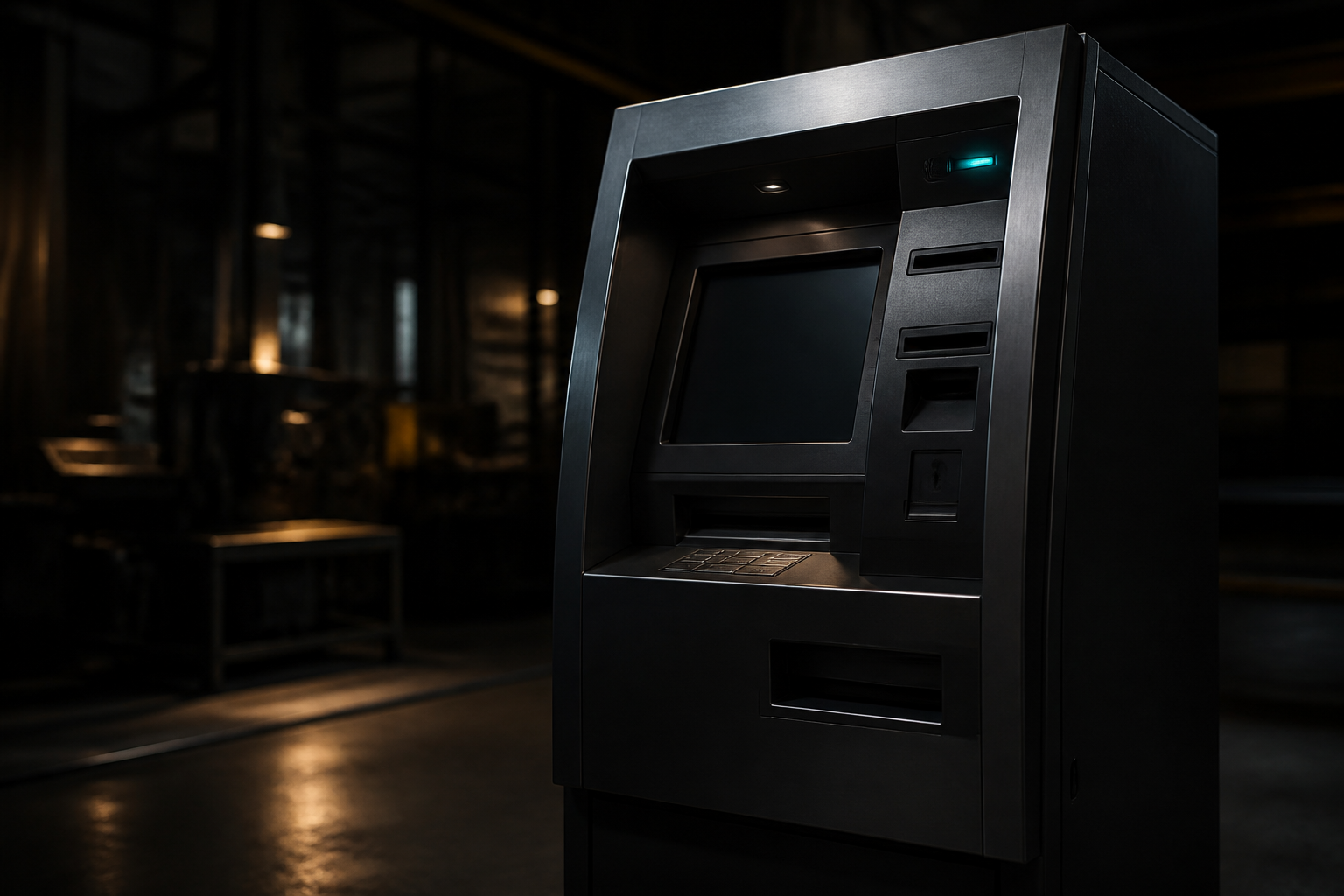
It is useful to think of a modern ATM as a stack, not a product. Each layer has a job. Failures usually sit at a boundary between layers — a sensor that the software cannot interpret, a lock that the enclosure no longer protects, a network identity that does not match the machine on site.
- Enclosure and physical security
- Cash modules and note path
- Customer interface
- Electronics, sensors, and power
- Terminal software
- Network identity and telemetry
Why a stack view helps
Operations teams do not repair “the ATM” in the abstract. They repair a jammed dispenser, a silent network interface, a failed reader, or a door sensor. Clear anatomy makes diagnostics faster and training more precise.
Serviceability is part of the anatomy
Modular construction is not a manufacturing convenience. It is how a fleet stays online. A cash module that can be swapped, a reader that can be replaced, and a software image that can be verified are as important as the original bill of materials.