ATM software
Terminal software drives the customer flow, talks to modules, and enforces device-level controls. It is expected to fail closed.
Hardware executes. Software decides — how a session is handled, how the device reports, and how the fleet is changed without putting cash access at risk.
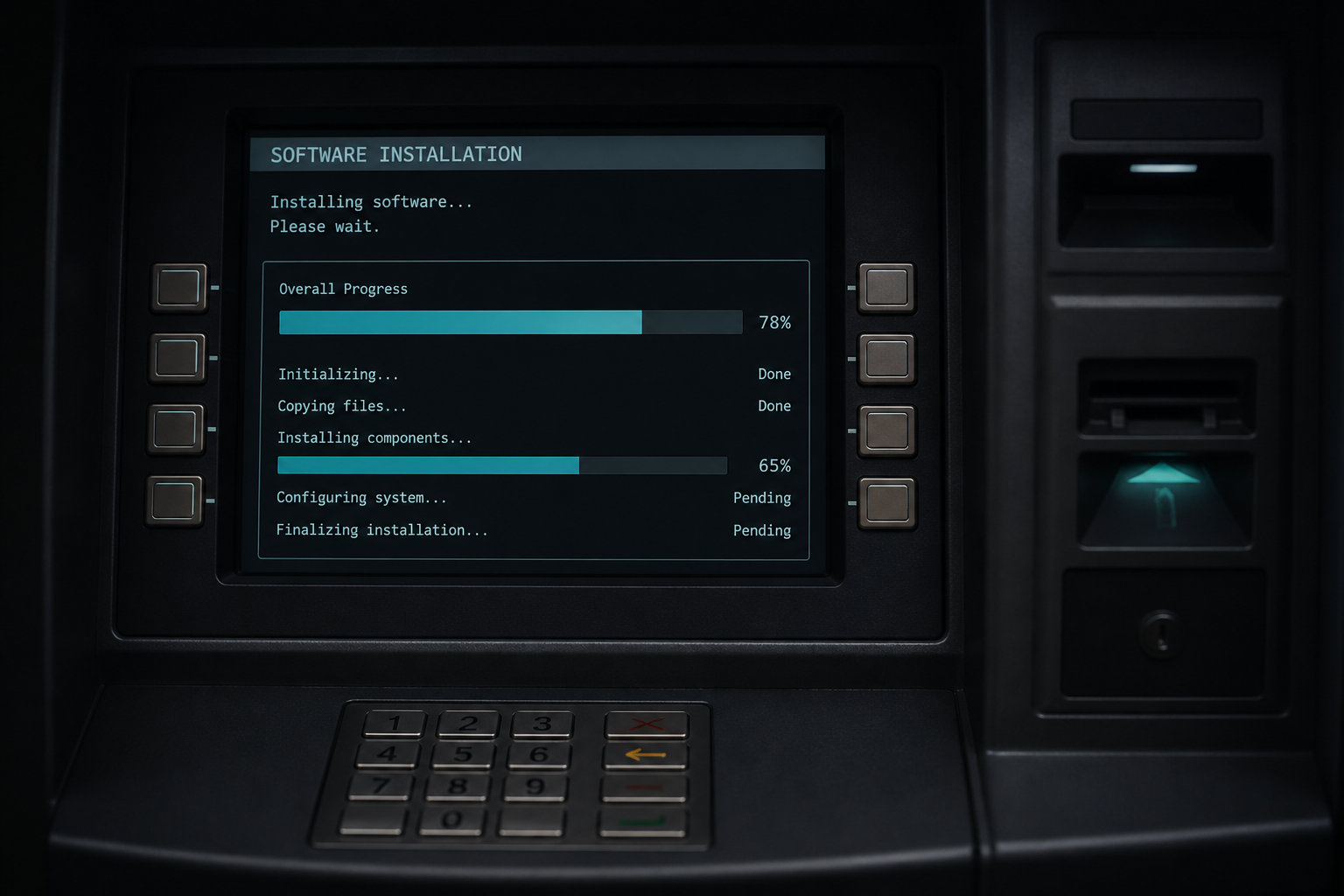
Terminal software drives the customer flow, talks to modules, and enforces device-level controls. It is expected to fail closed.
A system of record for what machines exist, where they are, what they run, and what they are doing.
Identity, configuration, and software state for each terminal — so the fleet is an inventory, not a rumour.
Health, connectivity, cash, and security events report into the platform continuously.
Sessions are encrypted and authenticated at the terminal before they reach the network. Public pages do not describe implementation.
Attributed, time-stamped signals: online state, module faults, sensors, cassette status.
Remote diagnostics exist to send the right field visit, not to pretend the field visit is optional.
Authenticated, staged, visible, and reversible. Updating thousands of cash machines is a control problem.
Operators need thresholds and context — not a firehose. Alerts should lead to owned work.
Banking and operational systems connect to Bogg infrastructure through defined interfaces, not informal exports.
Data is useful when it changes dispatch, replenishment, or the next hardware revision.
Tell us about the network you run — or the one you need to build. Hardware, software, monitoring, security, deployment, and maintenance sit in one conversation.